




YOUR WEBSITEfor eventpromoters
A website on your own domain for your production company and your dates, in 8 languages and ranked on Google and in ChatGPT, Perplexity and Gemini, so the crowd finds you when they look for something to do tonight.
From USD 300. See packages
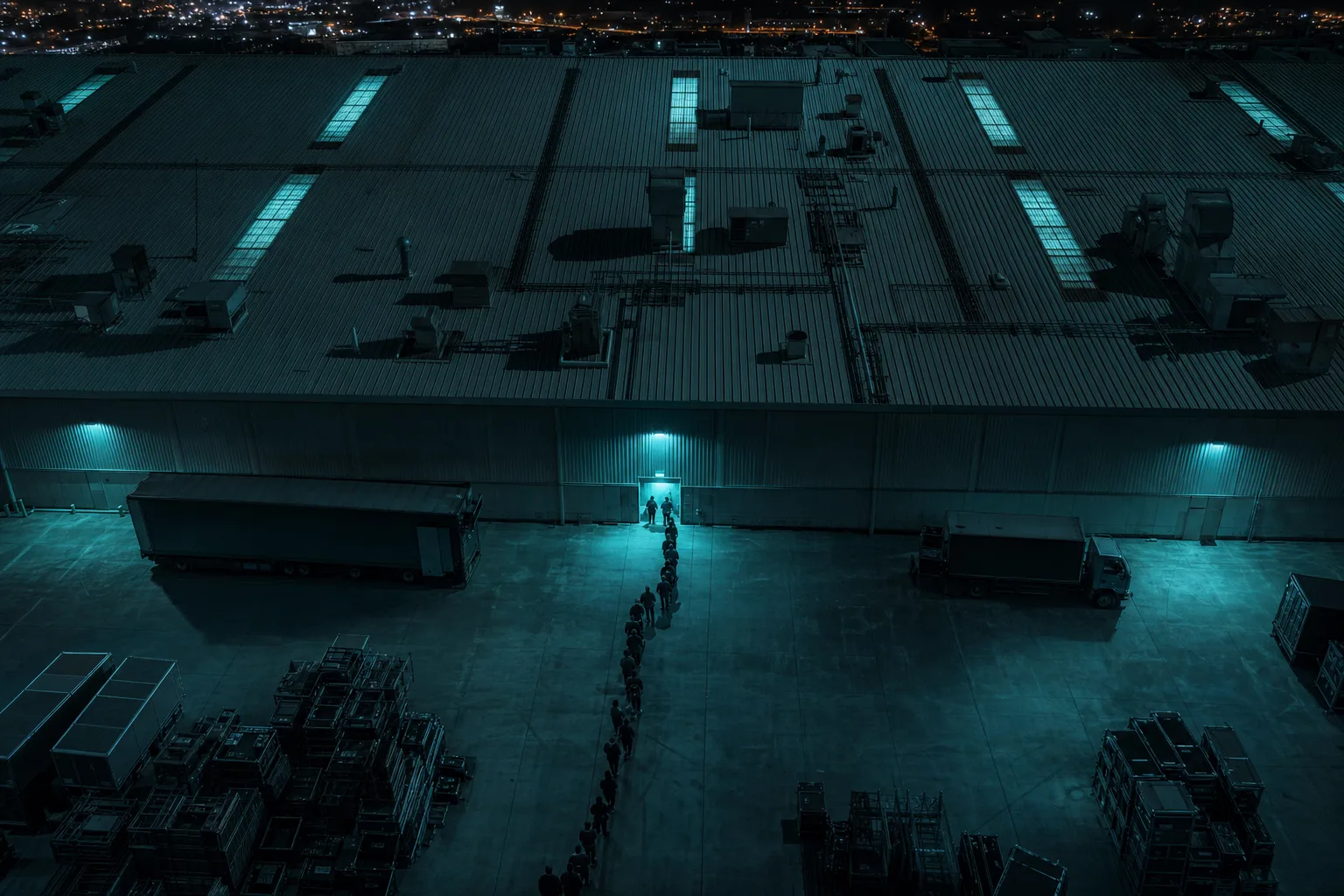
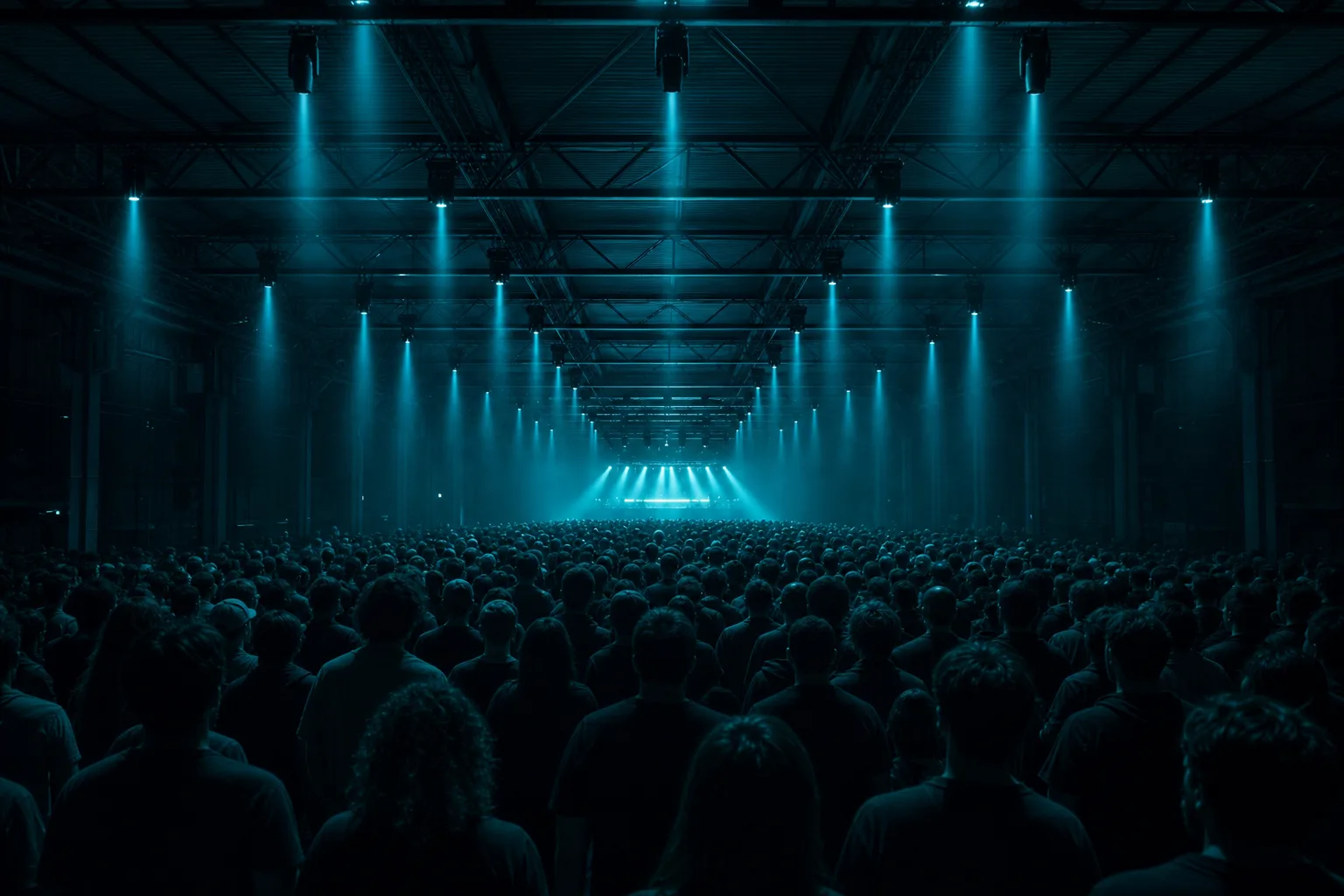
A show is decided long before the doors open. Capacity sets the ceiling on what this show can make. The line is the result. The cause was signed three months ago. Inside, nothing changes anymore. It just gets executed. A big room half full costs more than a small one that's packed. Everything you see here was booked before the first ticket was sold. The artist fee is the biggest number and the only one you can't bring down. By the time it plays, the math is already done. Sold out and losing money is possible. It happens a lot.
CAPACITY
0/ 800
Empty room
Break-even: 620 tickets, 78 percent of the room.
YOUR WEBSITE
Every date with its own page, in your name.
From USD 300 and USD 39 a month. See packages
Your own domain
one page per showYour company's website and one page per event, with the venue, the time and the link to the ticketing site.
8 languages
es, en, pt, fr, de, it, zh, jaFor fans who travel to see their artist and search in their own language.
Google and AI
things to do tonightRanked to show up when someone looks for events in your city, in ChatGPT, Perplexity and Gemini too.
PLUS, FOR YOUR INDUSTRY · THE DECISION
Four decisions, almost always made from memory.
Someone knows the artist. Someone saw them sell out in another city. Nobody does the math on how many tickets it takes to break even, and when someone does, it's already signed.
The fee
It gets closed over the phone and it's locked in. It's the biggest number of the show and the only one you can't bring down later.
The day
A Thursday in a packed month isn't the same as a Thursday in a quiet one. The competition that week is already announced and nobody looks at it.
The venue
Capacity sets the ceiling. A big room half full costs more than a small one that's packed.
The price
It gets set by looking at what the next promoter charged, not at what this show needs to break even.
WHAT YOU CAN ADD TO THE WEBSITE
Extras, built on your own data.
Without this, any automation runs on a date nobody knows how it sold.
CRM
on top of the one you haveIf you already have one, we work with that. If not, we set it up around how things actually run: artist, hold, contract, advancing.
Your customer data, organized
one row per personTicket buyers from past shows, merged by person and not by transaction, which is how they usually come.
Your own newsletter
your list, not the ticketing company'sYour list to announce a show before the ticketing company does, without paying anyone to reach your own people.
Chatbot that answers and qualifies
any time of dayAnswers the usual questions: set times, minimum age, tables, entrances and how to get there.
None of this is a platform of ours. It's set up on tools that already exist, it stays in your name with your logins, and your team learns to run it. If you already have something working, we build on that.
THE MATH
How many tickets this show needs to avoid losing money.
It's arithmetic, not an estimate: the artist fee plus fixed costs, divided by what each ticket nets. Move it and watch the threshold shift across the capacity.
What they charge to play.
Venue, sound, production, advertising and security.
What's left from each ticket after the ticketing company and taxes.
How many people fit.
BREAK-EVEN POINT
400tickets
That's 50 percent of the room. Below that, the show loses money.
- Minimum occupancy
- 50 percent
- Margin if the room sells out
- 400 tickets
- Selling seven out of ten
- 560 tickets, 160 above it
Nobody knows how many you'll sell. How many you need to sell to avoid losing money is a division, and it's the only one of the two questions with an exact answer.
The same math, with currency and a scenario table, is published and free: the break-even calculator.
THE MAP
Where those tickets fit, and at what price.
The math says how many. The map says where. Each venue goes in in three dimensions, with the capacity of each section, how it fills up and what you can see from each spot.
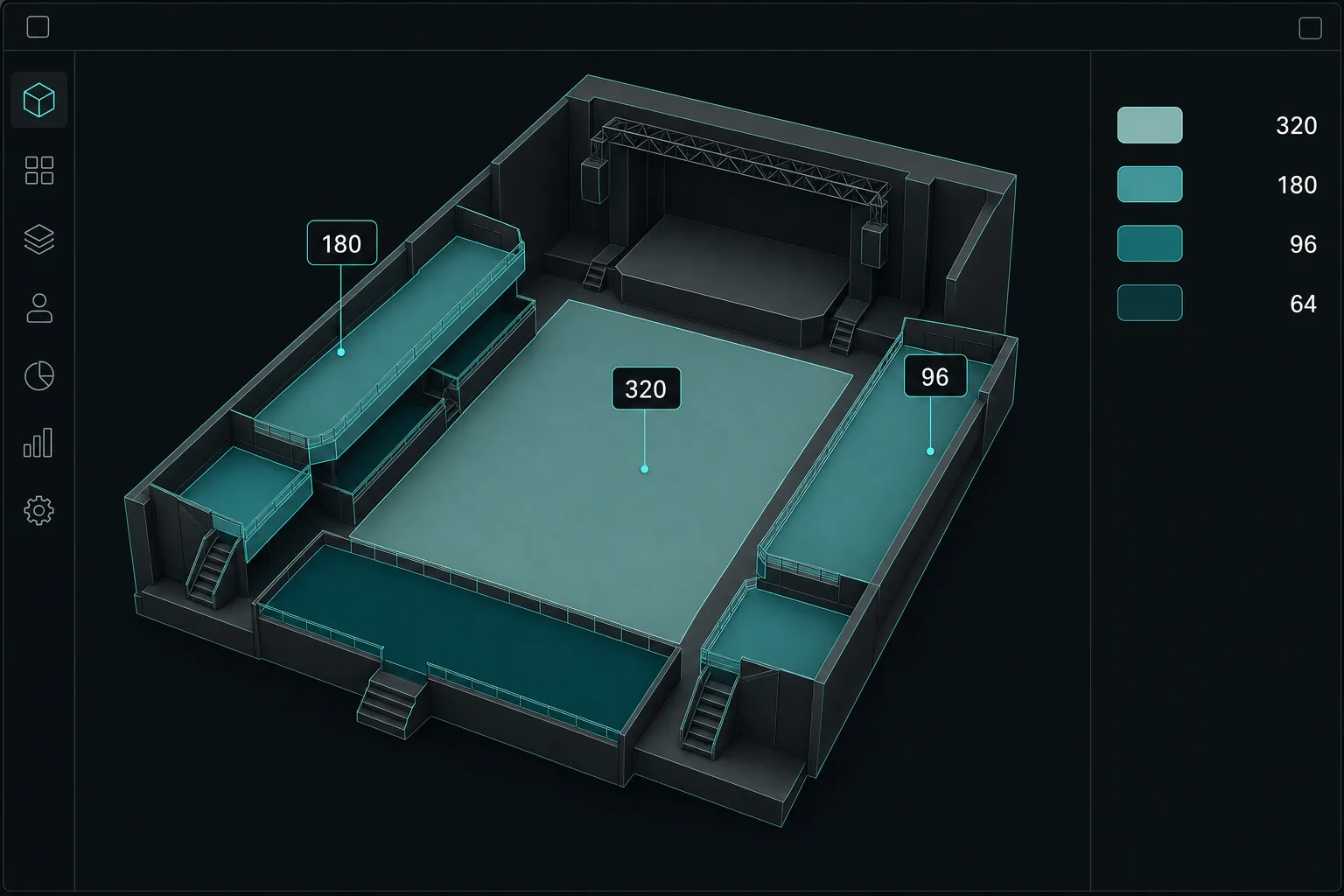
Capacity isn't a number. It's sections.
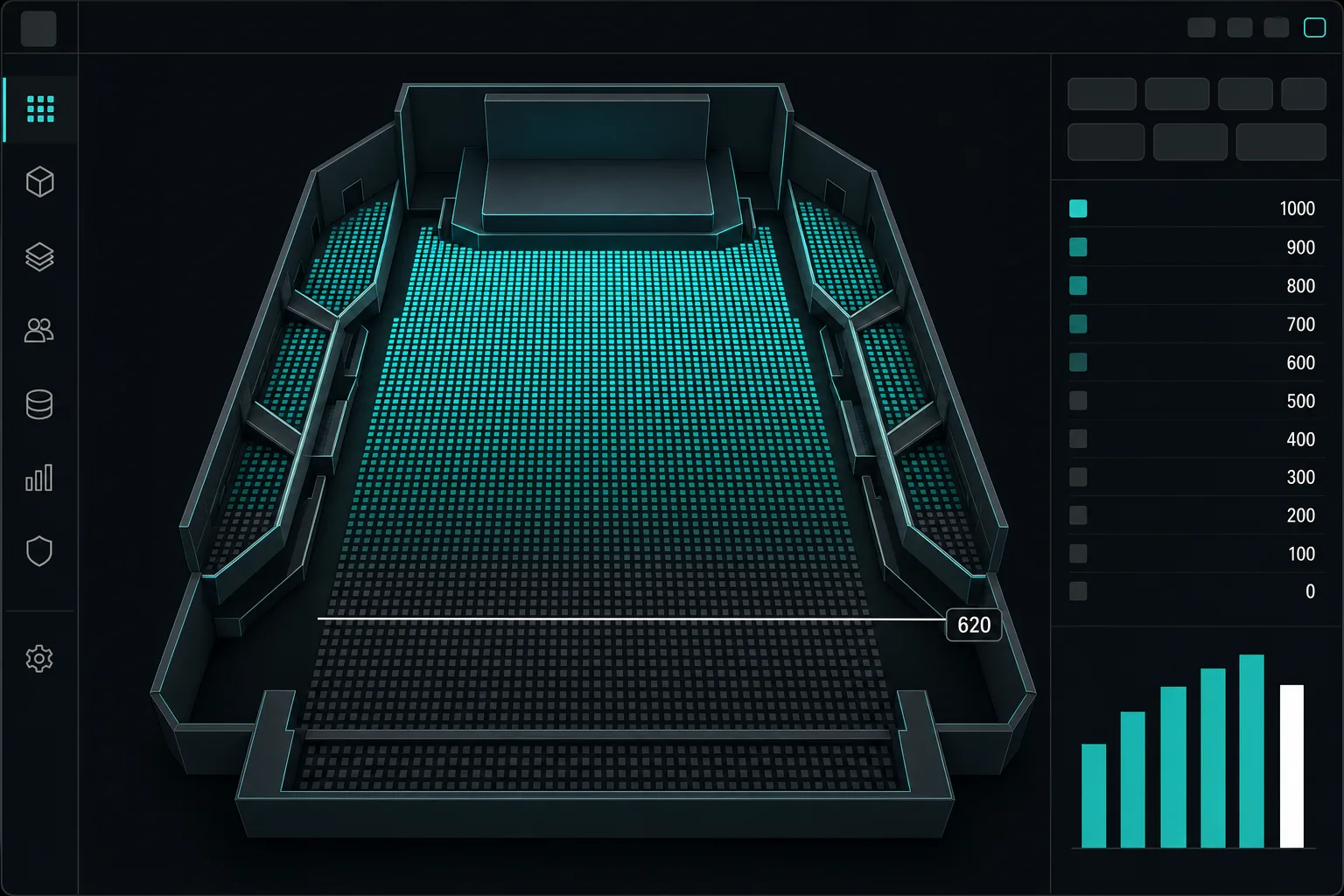
Floor, sides, boxes and back hold different numbers, cost different amounts and sell at different paces. The venue gets loaded once and keeps the capacity of each section, so you can price by zone instead of one price for everything.
A room fills from front to back.
The occupancy view shows what's sold section by section, with the break-even line running across the room. You can see right away whether what's left to sell is in the expensive zone or the cheap one, which is the difference between making it and not.
And not every spot sees the same thing.
The sightline study shows where you can see the whole stage and where the truss, a delay tower or the console blocks it. It's good for two things: not selling a bad spot as a good one, and deciding where the production should go.
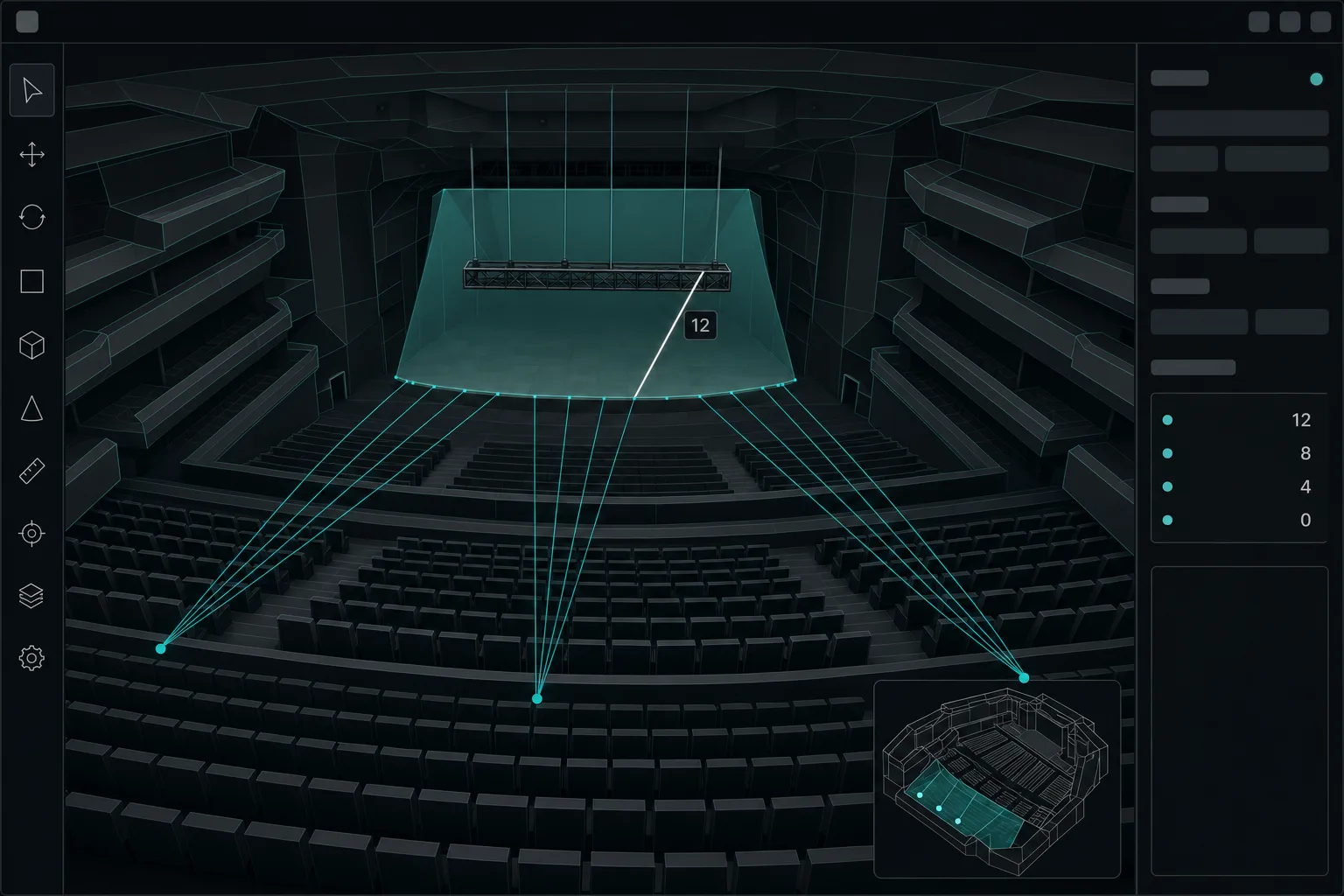
The map is built from the floor plans and the venue's stated capacity. It doesn't count seats for us: it organizes what the venue already knows about itself.
THE TOOLS
Six tools, and your team runs them.
We don't deliver a service you have to buy again for every show. We deliver the tool and the training to use it, which is what stays when the job is done.

Analyze a show before you sign it
Artist, market, venue and economics in a single read.
What observable audience there is in that city, what's competing that week, how packed the month is and which number decides it. Each show is saved exactly as it looked that day, so you can compare it later against what happened.
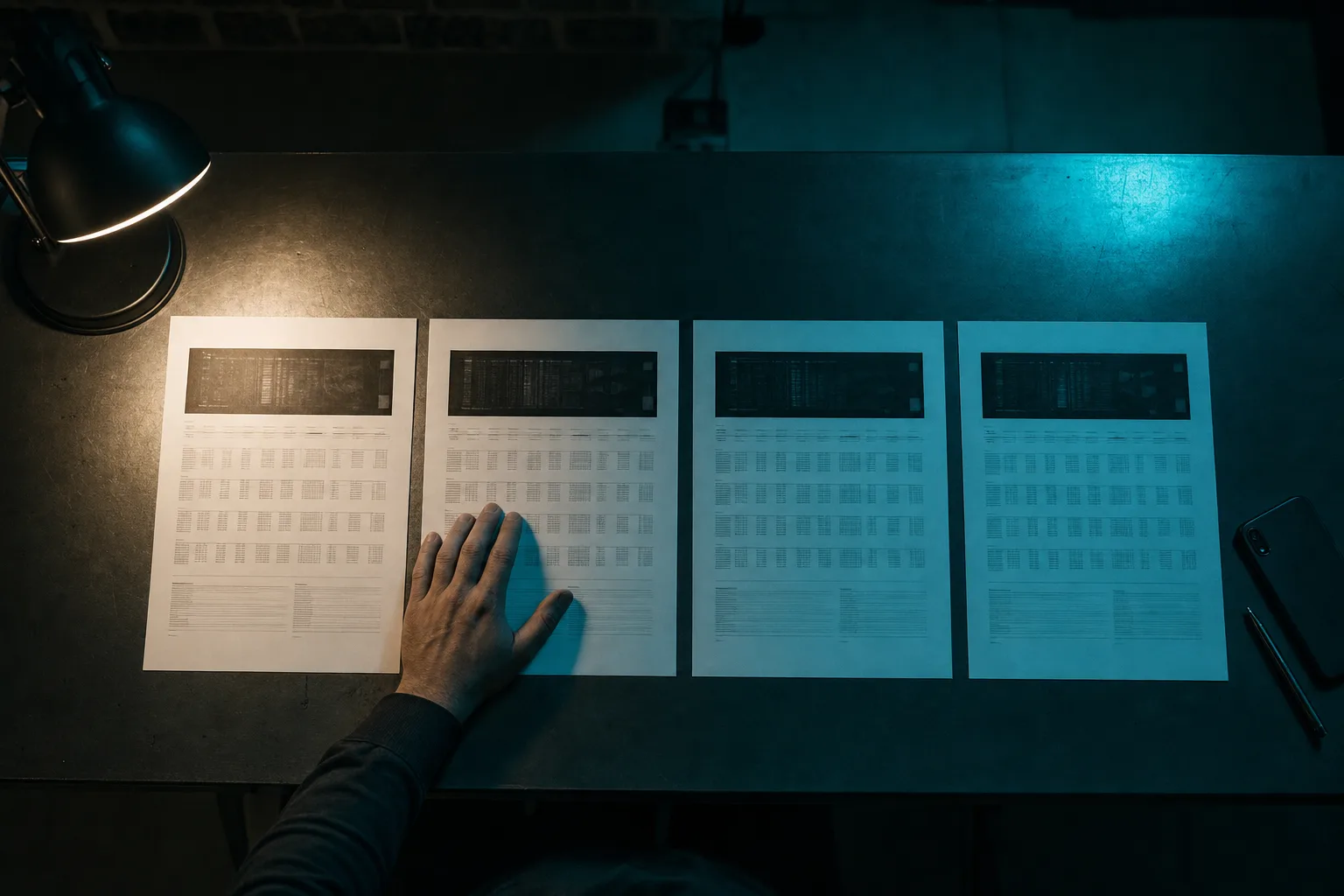
Compare shows side by side
Three or four options, with the same criteria.
When you have to choose between one artist and another, or between two venues, or between two weekends, the comparison is made with the same variables and not from memory.

The event page
The whole path through to payment.
General admission, tables, VIP, FAQ, WhatsApp and tracking. It's built on the ticketing company you already use, not a replacement for it.
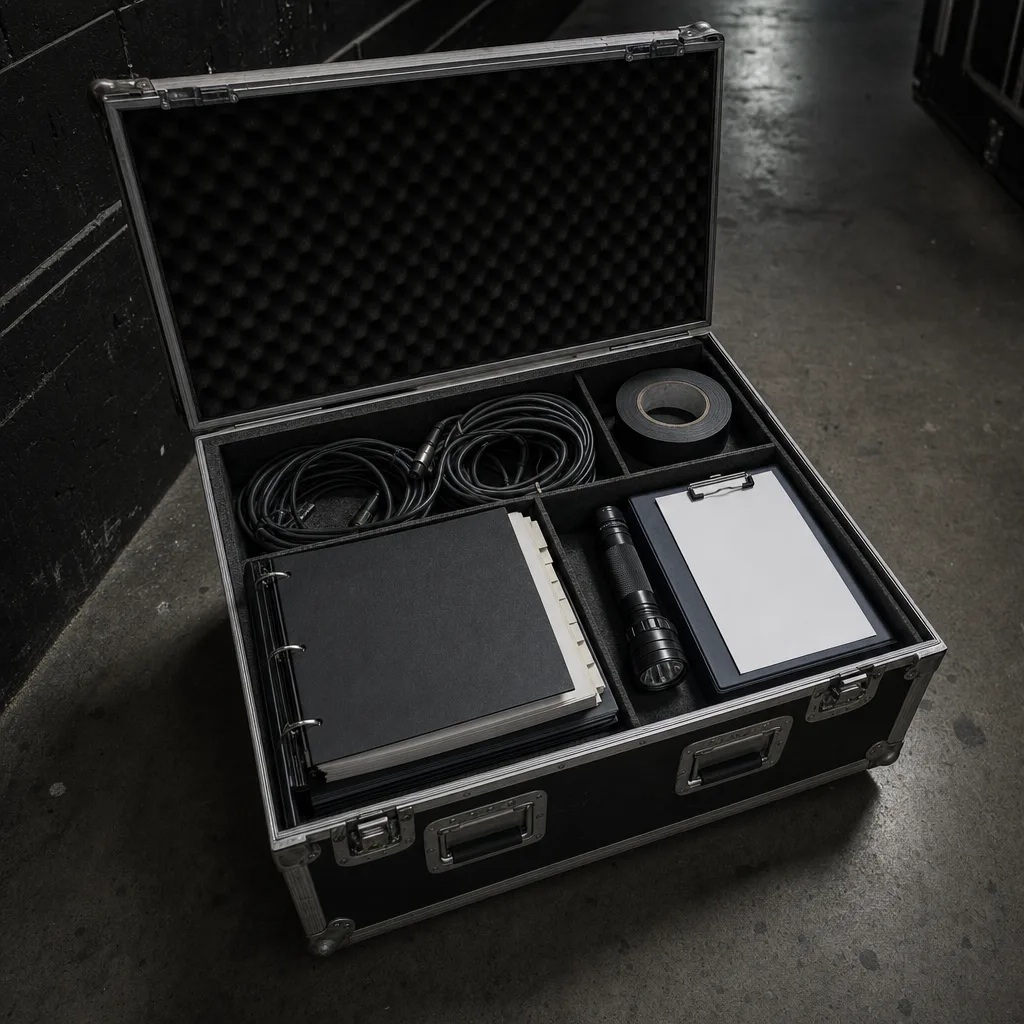
Advancing, prepared
The same back-and-forth for every show, ready ahead of time.
The contract and the rider produce the payments, the hotel, the flights, the transfers, the hospitality, the tech and the deadlines. A person approves before anything goes out.

Your buyer list
Merged by person, not by transaction.
People who bought tickets to past shows, deduplicated and with what they went to see. It's what lets you announce a show to your own people before the ticketing company does.

Chatbot that answers and qualifies
The usual questions, answered at any hour.
Set times, minimum age, tables, entrances and how to get there. And whatever it doesn't know, it hands off with the whole conversation attached.
THE PRODUCT
Smart software for production companies and promoters.
The software is already built and running. Both screenshots are from that product, with demo data.
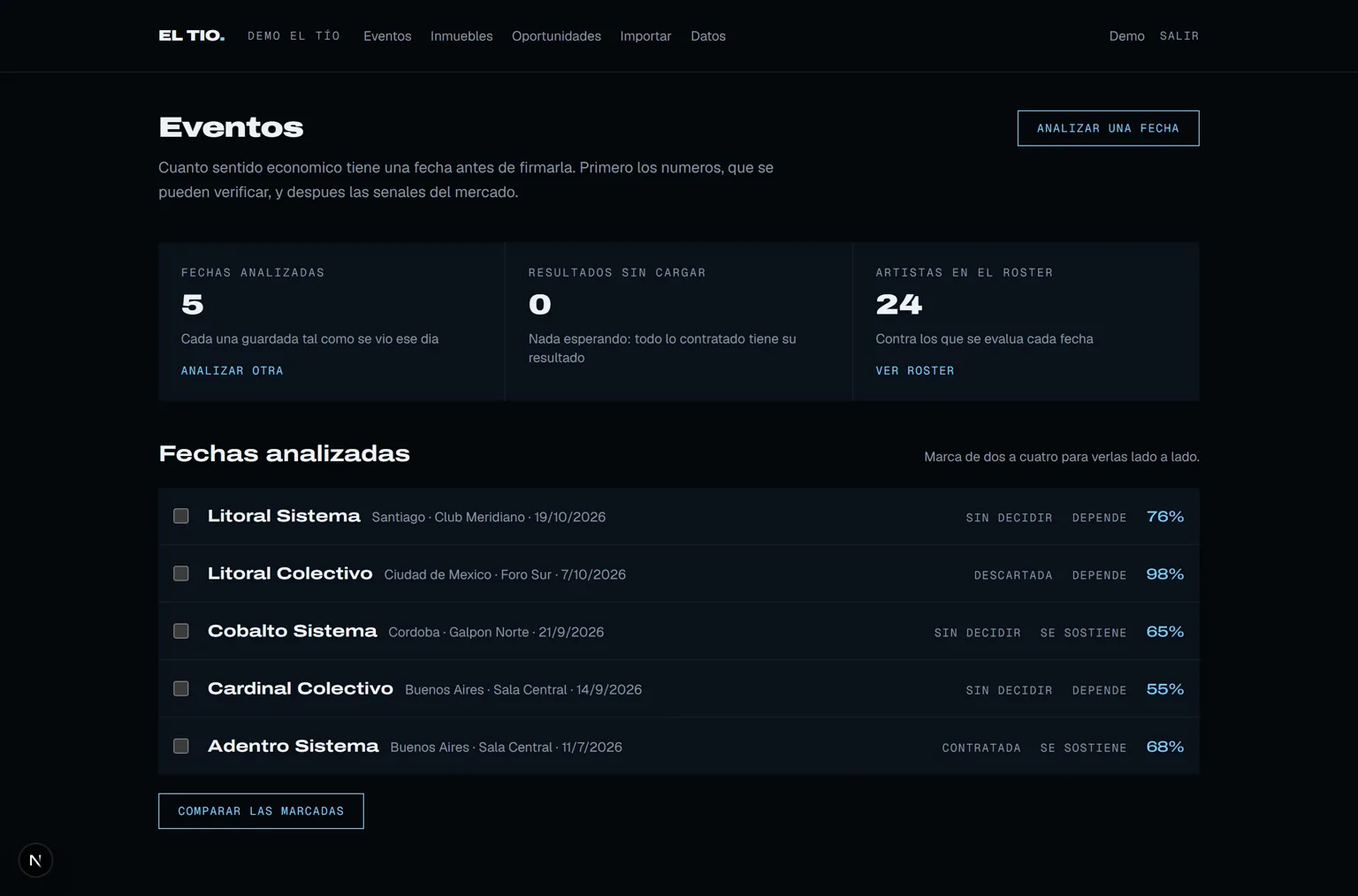
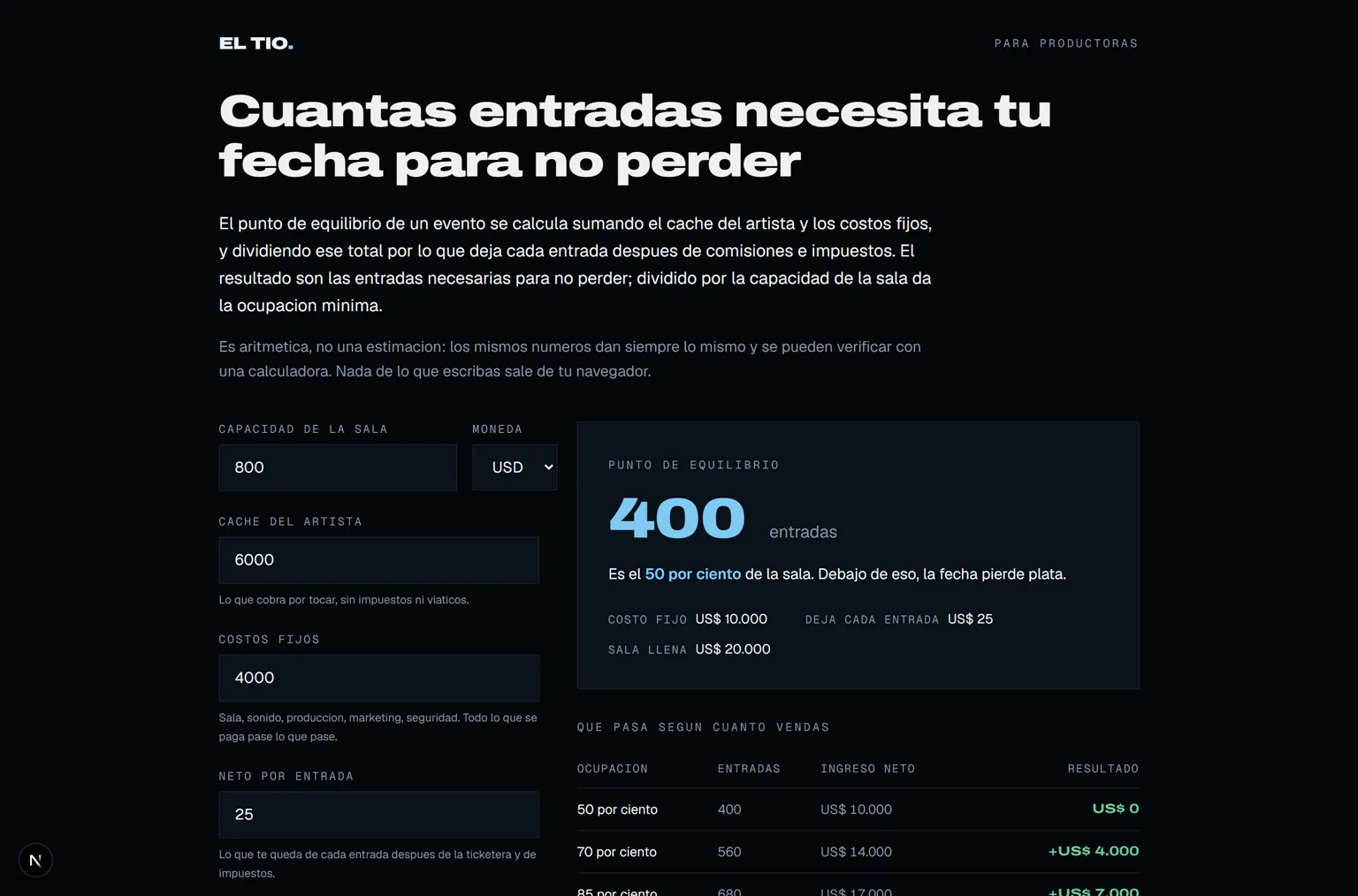
We don't predict ticket sales, and you should be wary of anyone who promises that. Other tools in the industry do it with verified ticketing data we don't have. Our territory is the economics of the show.
A SCENARIO
A production company with 2 to 4 shows a month in an 800-capacity room
- WHAT GOES IN
- The artist fee, the cost of the venue, production and advertising, the ticket price and the ticketing company's commission. On the artist's side, what observable audience there is in that city and what else is happening that week.
- WHAT COMES OUT
- How many tickets it takes to avoid losing money and what percentage of capacity that is. If it's 620 out of 800, the risk is high.
- WHAT CHANGES
- You sign, renegotiate the fee or pass. With the number on the table, not after.
What we'd measure: show by show, the estimate against what happened. It's the only honest way to get more accurate.
THE ROADMAP
Ninety days, and the one moment that doesn't move.
- D-90DecideArtist, day, venue, fee and price. This is where the date is won or lost.
- D-75Build the foundationCRM, buyer list, newsletter, your own page.
- D-60Do the mathHow many tickets to avoid losing money and what share of capacity that is.
- D-45Sign or don'tWith the number on the table: sign, renegotiate or pass.
- D-30AnnounceThe show page, the announcement to your own people, the ads.
- D-14Prep the showAdvancing: payments, hotel, flights, transfers, tech.
- D-3Lock down operationsLists, credentials, door, set times.
- D-0DoorsFrom here on, it's just execution.
- D+1SettlementThe estimate against what happened, saved for next time.
THE AUDIT
Seven areas, with the industry on top.
The Audit doesn't look at the show: it looks at the production company. A guided 15 to 25 minute questionnaire, free, and the roadmap comes out of that.
- SALES
How a show gets decided, and what happens with people who already bought tickets before.
- OPERATIONS
Advancing, riders, hotels, flights and everything that repeats for every show.
- DATA
Break-even, show closeouts and what gets recorded from each show.
- MARKETING
The event page, the ads and where each sale comes from.
- GUEST SERVICE
The same questions as always: set times, age, tables, entrances.
- TEAM
Which parts of production could get handled without hiring anyone else.
- SOFTWARE
Ticketing company, spreadsheets, CRM and what's disconnected from what.
THE METHOD
Four stages, always in this order.
Each one builds on the one before.
- 01
We audit
We look at the operation area by area. Without this, what comes next is guesswork.
- 02
We optimize
The process gets sorted out before it's automated. Automating something bad makes it faster, not better.
- 03
We automate
Only what makes sense for this production company, in the order that works best.
- 04
We train
The team walks away knowing how to run it. If it depends on us, it's no good.
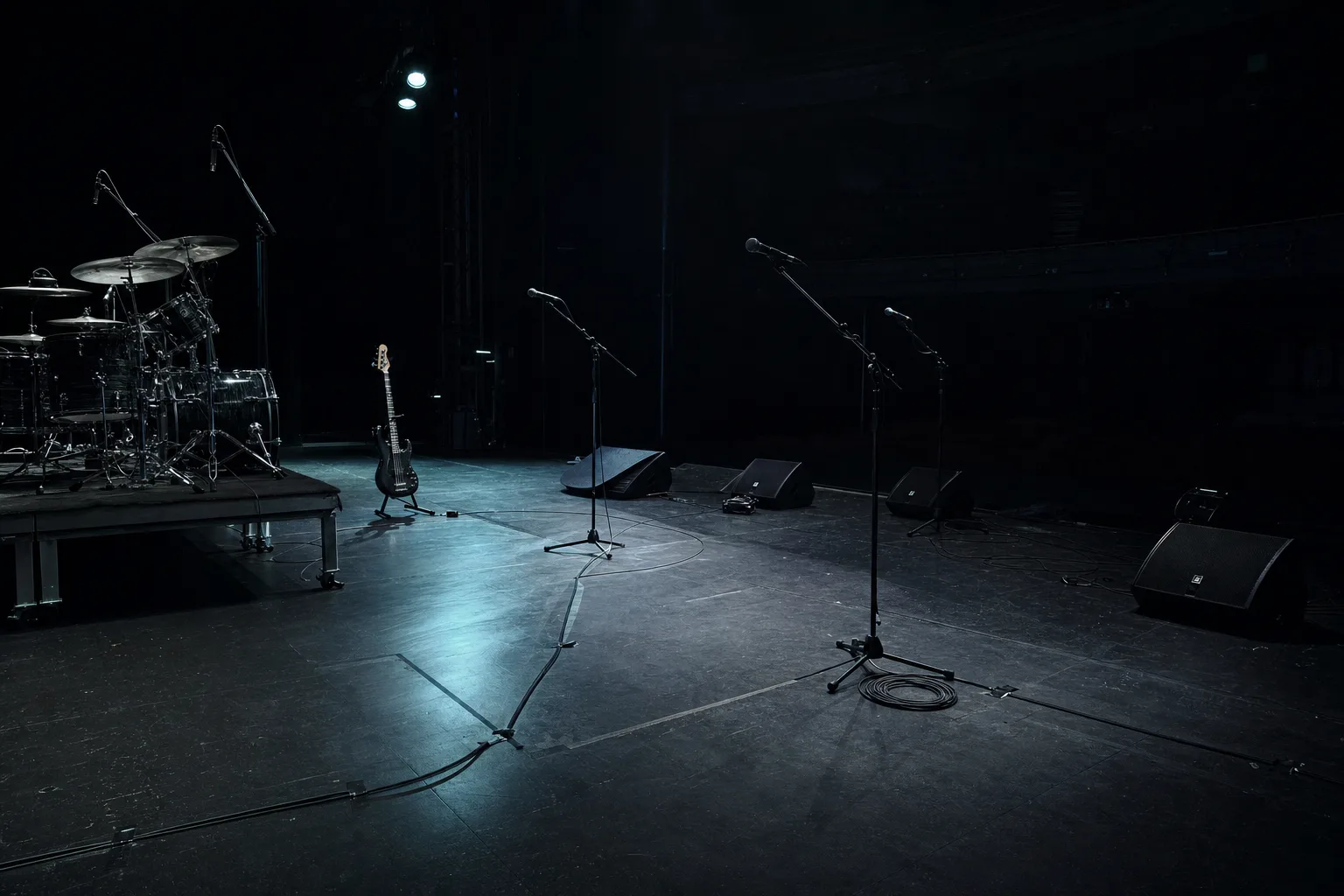
D-0
DOORS
Nothing gets decided from here on. You execute what was decided ninety days earlier.
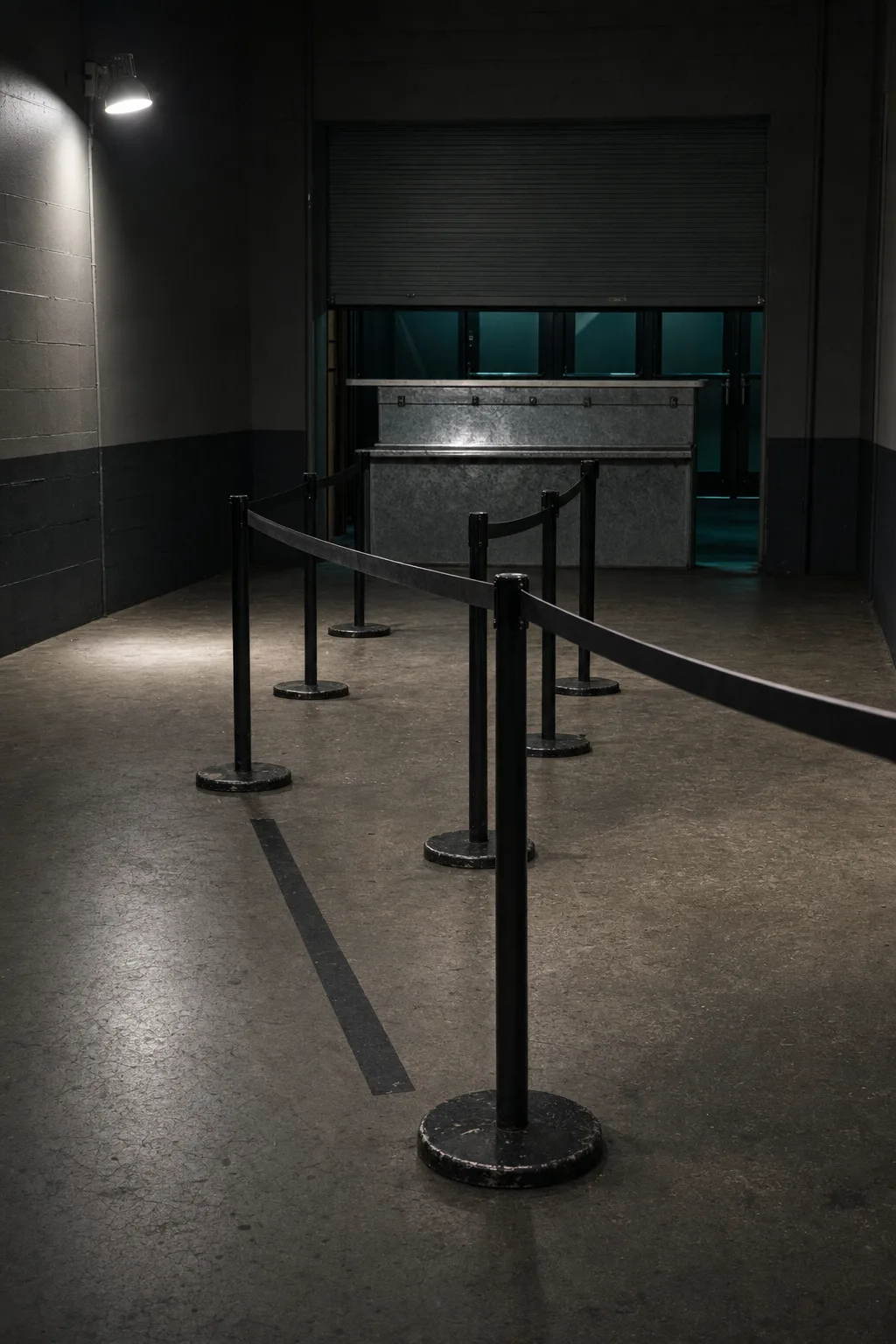
THE SETTLEMENT
First we measure. Then we decide.
- Guided questionnaire15 to 25 min
- Areas measured7 plus your industry
- Prioritized roadmapnow and later
- Human reviewbefore delivery
- Proposal and paymentin writing and online
- Conclusion with the changesto make
TOTAL
48 h
Free: a 15 to 25 minute questionnaire and a map of your production company, with the order in which it makes sense to tackle each thing.
Audit my production companyDelivered within 24 to 48 business hours.
Whatever implementation costs comes in the roadmap, with the scope of each item next to it. Nothing gets quoted before we measure.

WHAT PEOPLE ASK
What people usually ask.
I know my market better than you do.
Sure. This doesn't replace your judgment: it puts the number next to it before you sign.
Are you going to tell me if I'll sell?
No, and be wary of anyone who promises that. We tell you how much you need to sell to avoid losing money.
Streaming data doesn't tell you anything.
On its own, no. That's why the analysis cross-checks it with the economics of your venue, which is what decides it.
I already use a ticketing company with reports.
Those reports come after the show. This is before you sign.